










































News

22.07.2026 • SAN DIEGO COMIC CON 2026
Today's Preview Night kicks off San Diego Comic-Con 2026, ahead of the San Diego Convention Center officially opening its doors tomorrow for the pop-culture event of the year. We're expecting a huge lineup of panels featuring interesting announcements, numerous trailers for upcoming movies and series, and – of course – a host of exciting new collectibles.
As always, we'll be (virtually) scouring the show floor to see what manufacturers like Sideshow, Iron Studios, Weta Workshop, Kaustic Plastik, and many others are unveiling in San Diego, compiling the highlights and presenting them in a NADFU special on our YouTube channel next week. What are you most excited about?
As always, we'll be (virtually) scouring the show floor to see what manufacturers like Sideshow, Iron Studios, Weta Workshop, Kaustic Plastik, and many others are unveiling in San Diego, compiling the highlights and presenting them in a NADFU special on our YouTube channel next week. What are you most excited about?

22.07.2026 • THE POWER OF GRAYSKULL IN OUR LIVING ROOMS!
»Masters of the Universe« – the live-action blockbuster from director Travis Knight that has been celebrated by us fans – premieres today exclusively on Prime Video at no extra cost. 🥳💪
However, anyone wanting to experience the epic battle for honor, power, and the future of Eternia on disc, or simply have it on their shelf, will have to be patient. A specific release date for DVD and Blu-ray is not yet known, though there will likely be several editions to choose from, ensuring something for every taste and budget. The 4K UHD Blu-ray Collector's Steelbook Edition sounds particularly tempting; it will include items such as a poster and art cards and appears to be available exclusively via the Plaion Pictures shop.
However, anyone wanting to experience the epic battle for honor, power, and the future of Eternia on disc, or simply have it on their shelf, will have to be patient. A specific release date for DVD and Blu-ray is not yet known, though there will likely be several editions to choose from, ensuring something for every taste and budget. The 4K UHD Blu-ray Collector's Steelbook Edition sounds particularly tempting; it will include items such as a poster and art cards and appears to be available exclusively via the Plaion Pictures shop.
21.07.2026 • AN UPRISING, A DARK KNIGHT, AND THE ONE RING
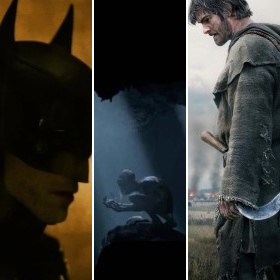
A few days ago, Focus Features released the first trailer for Paul Greengrass's latest project – one that fans of historical films among you will likely be excited about: »The Uprising«! In this film, the director, best known to most for the Bourne movies, tells the story of the Peasants' Revolt of 1381 in England, during which peasants and fishermen rose up against the oppression of tax collectors and King Richard II. The story centers on Wat Tyler, one of the rebellion's leaders, portrayed here by Andrew Garfield. We're really looking forward to seeing Garfield in such a gritty, dark film – especially one shot right in our own backyard! Filming took place in 2025 at various locations in Franconia and Munich. We'll be able to see the final result in theaters this September. Check out the trailer here:
https://youtu.be/ZVkrhHebz1Q
We'll have to wait considerably longer for »The Batman: Part II«; the blockbuster's release date, February 18, 2028, was announced via an official "Camera Test" teaser that shows nothing more than a close-up of Robert Pattinson in the superhero's costume, slowly turning toward the camera. After several delays, Matt Reeves' sequel to »The Batman« (2022) is now set to hit US theaters six years after the original film. It was originally scheduled to arrive on the big screen in 2025.
https://youtu.be/aG8U7-XK7PI
Andy Serkis, who will reprise his role as Alfred Pennyworth in »The Batman: Part II«, is bringing his own film to theaters about two months prior. In »The Lord of the Rings: The Hunt for Gollum«, he is not only directing but also returning to what is arguably his most famous role: Gollum. After Anya Taylor-Joy was announced as part of the cast just last month, we got a brief "Start of Production" teaser a few days ago that, to the delight of fans, showed a real set instead of a green screen. You can watch the short but epic clip here:
https://youtu.be/g5Rc_MTTO9M
Which of these films are you most looking forward to?
https://youtu.be/ZVkrhHebz1Q
We'll have to wait considerably longer for »The Batman: Part II«; the blockbuster's release date, February 18, 2028, was announced via an official "Camera Test" teaser that shows nothing more than a close-up of Robert Pattinson in the superhero's costume, slowly turning toward the camera. After several delays, Matt Reeves' sequel to »The Batman« (2022) is now set to hit US theaters six years after the original film. It was originally scheduled to arrive on the big screen in 2025.
https://youtu.be/aG8U7-XK7PI
Andy Serkis, who will reprise his role as Alfred Pennyworth in »The Batman: Part II«, is bringing his own film to theaters about two months prior. In »The Lord of the Rings: The Hunt for Gollum«, he is not only directing but also returning to what is arguably his most famous role: Gollum. After Anya Taylor-Joy was announced as part of the cast just last month, we got a brief "Start of Production" teaser a few days ago that, to the delight of fans, showed a real set instead of a green screen. You can watch the short but epic clip here:
https://youtu.be/g5Rc_MTTO9M
Which of these films are you most looking forward to?
20.07.2026 • SOMETHING'S COMING ... DOOMSDAY!
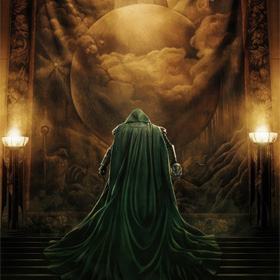
Not waiting for the theatrical release of »Spider-Man: Brand New Day«, but right now – serving, so to speak, as an early prelude to San Diego Comic-Con – Marvel Studios has unleashed the official trailer for »Avengers: Doomsday« upon the world:
https://youtu.be/irVNGjRFZGk
So, who's got goosebumps? 🤯
https://youtu.be/irVNGjRFZGk
So, who's got goosebumps? 🤯

20.07.2026 • 25 YEARS OF SPIRITED AWAY
It is hard to believe that this legendary masterpiece by Hayao Miyazaki is already 25 years old: »Spirited Away«, one of the most famous films from Studio Ghibli, celebrates its anniversary today. To mark the occasion, several cinemas are bringing this unforgettable adventure back to the big screen in August – just shortly after the highly emotional re-release success of »Grave of the Fireflies«.
»Spirited Away« follows the story of the shy girl Chihiro, who discovers a seemingly abandoned village with her parents. At this point, they have no idea that this is actually the realm of gods and spirits, which is forbidden to humans. After Chihiro's parents gorge themselves on food from one of the stalls without asking, they literally turn into greedy pigs. Suddenly, the ten-year-old is completely on her own and forced to work in the bathhouse of the shady witch Yubaba. Yubaba steals her name to magically bind her to a contract that prevents her and her parents from returning to the human world. A similar fate is shared by the mysterious boy Haku, who is under the witch's magical spell and serves as her compliant henchman. Just as Chihiro is about to forget her true identity, Haku stands by her side. Now it is up to her to free them both and her parents from Yubaba's clutches.
»Spirited Away« is a truly cohesive and profound film, even though Hayao Miyazaki began production at the time without a finished script. In this way, the story developed organically during the drawing process. Nonetheless, he succeeded in creating a thoroughly thought-out story from start to finish, complete with multi-layered characters and a captivating atmosphere that remains memorable to many of us to this day. Furthermore, Miyazaki likes to incorporate socially critical themes into his works to question our humanity and our place in the world. Thus, consumer greed and environmental pollution are central elements of the film, illustrated through the hungry pigs, No-Face, and the stinky river spirit.
The true centerpiece of the film, however, remains the character development of the two protagonists. It is incredibly rewarding to accompany Chihiro on her journey from an anxious girl to a brave heroine. Haku's relationship with the witch Yubaba and his transformation from loyal henchman to rebel who gradually questions his blind loyalty is also fascinating to watch every single time. This inner liberation of both characters shows that empathy and identity are arguably the most powerful weapons against greed and tyranny. This is exactly what makes this emotional masterpiece so unique and, above all, timeless.
»Spirited Away« follows the story of the shy girl Chihiro, who discovers a seemingly abandoned village with her parents. At this point, they have no idea that this is actually the realm of gods and spirits, which is forbidden to humans. After Chihiro's parents gorge themselves on food from one of the stalls without asking, they literally turn into greedy pigs. Suddenly, the ten-year-old is completely on her own and forced to work in the bathhouse of the shady witch Yubaba. Yubaba steals her name to magically bind her to a contract that prevents her and her parents from returning to the human world. A similar fate is shared by the mysterious boy Haku, who is under the witch's magical spell and serves as her compliant henchman. Just as Chihiro is about to forget her true identity, Haku stands by her side. Now it is up to her to free them both and her parents from Yubaba's clutches.
»Spirited Away« is a truly cohesive and profound film, even though Hayao Miyazaki began production at the time without a finished script. In this way, the story developed organically during the drawing process. Nonetheless, he succeeded in creating a thoroughly thought-out story from start to finish, complete with multi-layered characters and a captivating atmosphere that remains memorable to many of us to this day. Furthermore, Miyazaki likes to incorporate socially critical themes into his works to question our humanity and our place in the world. Thus, consumer greed and environmental pollution are central elements of the film, illustrated through the hungry pigs, No-Face, and the stinky river spirit.
The true centerpiece of the film, however, remains the character development of the two protagonists. It is incredibly rewarding to accompany Chihiro on her journey from an anxious girl to a brave heroine. Haku's relationship with the witch Yubaba and his transformation from loyal henchman to rebel who gradually questions his blind loyalty is also fascinating to watch every single time. This inner liberation of both characters shows that empathy and identity are arguably the most powerful weapons against greed and tyranny. This is exactly what makes this emotional masterpiece so unique and, above all, timeless.
16.07.2026 • THE ODYSSEY
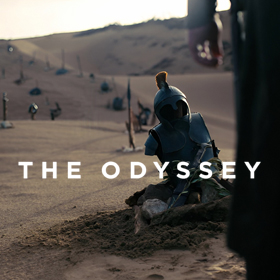
When Christopher Nolan brings his next film to theaters, it's always a gigantic event. The director is considered one of the most important filmmakers of the 2010s and 2020s ... and his films have never exactly been short on controversy either. Be it Heath Ledger's casting and death around »The Dark Knight«, the Barbenheimer hype and the Florence Pugh nude scene around »Oppenheimer«, the theatrical run of »Tenet« in the middle of the pandemic, the at times barely intelligible dialogue mix, or his insistence on the IMAX format and the fact that follows from it – that 90% of moviegoers will only ever see 70% of the image.
But never has the sheer volume of controversy before release been as high as it is right now with »The Odyssey«. The film is being attacked from literally every side: the production design, the casting, the atmosphere. Whether it's the trained archaeologist of classical antiquity or the keyboard crusader who has seen both »Troy« and »300« once, everybody wants to throw in their two cents. Ever since the first images and trailers came out, an unusually fierce debate has been raging, one that ties concrete criticism of language, production design, and cinematography to a politically charged culture war over individual casting choices, targeting above all Lupita Nyong'o as Helen and Elliot Page as Sinon (for a long time wrongly "identified" as Achilles). On top of that: the American accents, the deliberately modern dialogue, the absence of actors from Greece, Türkiye or the Levant, and the heavily desaturated imagery. Nolan himself considers the debate "irrelevant," because nobody has seen the film yet, and defends the language by arguing that the source material is at its core "earthy" and accessible, and that we only elevate antiquity out of cultural prejudice. Early critical reactions are overwhelmingly very positive – the gap between the online shitstorm and the trade press is itself becoming part of the story.
We're torn between anticipation for this next huge Nolan epic and the rather stubborn fear that Viking ships, high-gloss Roman gladiator armor, and Batman helmets are going to block our immersion to a certain extent. Even so: this is a fantasy film, not a historical one, and it should be judged as such. Perhaps it would have been wise to spell that out more clearly in the marketing instead of manufacturing a dissonance between sword-and-sandal and urban fantasy.
The film opens in theaters today – and we wish you a whole lot of fun with it!
But never has the sheer volume of controversy before release been as high as it is right now with »The Odyssey«. The film is being attacked from literally every side: the production design, the casting, the atmosphere. Whether it's the trained archaeologist of classical antiquity or the keyboard crusader who has seen both »Troy« and »300« once, everybody wants to throw in their two cents. Ever since the first images and trailers came out, an unusually fierce debate has been raging, one that ties concrete criticism of language, production design, and cinematography to a politically charged culture war over individual casting choices, targeting above all Lupita Nyong'o as Helen and Elliot Page as Sinon (for a long time wrongly "identified" as Achilles). On top of that: the American accents, the deliberately modern dialogue, the absence of actors from Greece, Türkiye or the Levant, and the heavily desaturated imagery. Nolan himself considers the debate "irrelevant," because nobody has seen the film yet, and defends the language by arguing that the source material is at its core "earthy" and accessible, and that we only elevate antiquity out of cultural prejudice. Early critical reactions are overwhelmingly very positive – the gap between the online shitstorm and the trade press is itself becoming part of the story.
We're torn between anticipation for this next huge Nolan epic and the rather stubborn fear that Viking ships, high-gloss Roman gladiator armor, and Batman helmets are going to block our immersion to a certain extent. Even so: this is a fantasy film, not a historical one, and it should be judged as such. Perhaps it would have been wise to spell that out more clearly in the marketing instead of manufacturing a dissonance between sword-and-sandal and urban fantasy.
The film opens in theaters today – and we wish you a whole lot of fun with it!
16.07.2026 • I PLAY ROCKY
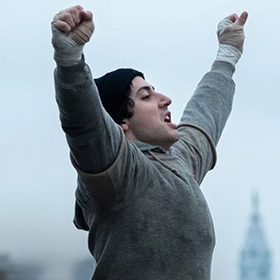
Just as »Rocky« became an overnight surprise hit 50 years ago and turned Sylvester Stallone into a star practically from one day to the next, a new trailer now has taken US by surprise overnight ... and even though our trailer news for this week is already wrapped up, we felt we had to point you toward this little gem!
The new biopic »I Play Rocky«, which had already been announced at Cinemacon, tells the story of how Stallone wrote the script for the film in just a few days and how he managed to land himself – until then fairly unsuccessful at auditions – in the lead role. The movie shows the now 80-year-old megastar in his humble beginnings and his sudden leap to full-blown A-lister and Oscar contender, an underdog story about an underdog story.
What's impressive here is how the young Anthony Ippolito slips into Stallone's skin and plays him almost indistinguishably – are we perhaps watching history repeat itself, with Ippolito turning into the new kid on the block himself? Stephan James is convincing in the trailer as Apollo Creed actor Carl Weathers, Matt Dillon takes on the role of Stallone's father Frank Stallone Sr., and AnnaSophia Robb plays Stallone's first wife Sasha Czack.
Watch the trailer here:
https://youtu.be/V_g_Ut0jO-0
If you're already in a nostalgic mood: have a look around our »Rocky« section in our shop! We've got the iconic fedora as a replica available for pre-order, for example:
https://www.space-figuren.de/Filme/Rocky:::4681_5079.html
The new biopic »I Play Rocky«, which had already been announced at Cinemacon, tells the story of how Stallone wrote the script for the film in just a few days and how he managed to land himself – until then fairly unsuccessful at auditions – in the lead role. The movie shows the now 80-year-old megastar in his humble beginnings and his sudden leap to full-blown A-lister and Oscar contender, an underdog story about an underdog story.
What's impressive here is how the young Anthony Ippolito slips into Stallone's skin and plays him almost indistinguishably – are we perhaps watching history repeat itself, with Ippolito turning into the new kid on the block himself? Stephan James is convincing in the trailer as Apollo Creed actor Carl Weathers, Matt Dillon takes on the role of Stallone's father Frank Stallone Sr., and AnnaSophia Robb plays Stallone's first wife Sasha Czack.
Watch the trailer here:
https://youtu.be/V_g_Ut0jO-0
If you're already in a nostalgic mood: have a look around our »Rocky« section in our shop! We've got the iconic fedora as a replica available for pre-order, for example:
https://www.space-figuren.de/Filme/Rocky:::4681_5079.html

15.07.2026 • NEW TRAILERS
Over the past few days, we've once again spotted a handful of new teasers and trailers – this time featuring a monster and plenty of dark humor!
»Godzilla Minus One« was a massive success in 2023, even taking home the Oscar for Best Visual Effects. Now, the story is set to continue in November with »Godzilla Minus Zero«. The brief teaser doesn't reveal much yet, but it already establishes a truly epic atmosphere and stunning visuals:
https://youtu.be/Xmy-Z3dHMd8
Two years after the events of the first film, Kōichi Shikishima is trying to build a quiet family life with his wife, Noriko, and their daughter. However, Godzilla, whose return was hinted at in the finale of the previous film, throws a wrench in their plans...
Guy Ritchie's dark action-comedy series »The Gentlemen«, centering on Eddie aka "The Duke" (Theo James), and his criminal dealings, is also returning. In season 2, he aims to expand his empire, locking horns with the Mafia in the process. This promises plenty of action and absurd situations. The new season arrives on Netflix on September 3rd. Check out the teaser here:
https://youtu.be/aOY7HTQlsSo
Alejandro G. Iñárritu's latest project, »Digger«, is a satirical comedy about the megalomaniacal, wealthy, and powerful Digger Rockwell (Tom Cruise) and his desperate attempt to prove he is humanity's savior – from a catastrophe he triggered himself. The trailer suggests a truly original and absurd film, backed by a stellar cast. Alongside a completely transformed Cruise, the movie features John Goodman, Sandra Hüller, and Jesse Plemons, among others! It hits theaters this October.
https://youtu.be/qORTe1wW3Wg
Last but not least, we'd like to recommend you the trailer for »Bad Apples«:
https://youtu.be/4nhu80EmVQE
In it, Saoirse Ronan plays Maria, an overwhelmed teacher who finds a, let's say, unconventional way to deal with a problem student... The satirical thriller has already been acclaimed at various film festivals and hits theaters in September. We're really looking forward to seeing Ronan in this macabre role!
»Godzilla Minus One« was a massive success in 2023, even taking home the Oscar for Best Visual Effects. Now, the story is set to continue in November with »Godzilla Minus Zero«. The brief teaser doesn't reveal much yet, but it already establishes a truly epic atmosphere and stunning visuals:
https://youtu.be/Xmy-Z3dHMd8
Two years after the events of the first film, Kōichi Shikishima is trying to build a quiet family life with his wife, Noriko, and their daughter. However, Godzilla, whose return was hinted at in the finale of the previous film, throws a wrench in their plans...
Guy Ritchie's dark action-comedy series »The Gentlemen«, centering on Eddie aka "The Duke" (Theo James), and his criminal dealings, is also returning. In season 2, he aims to expand his empire, locking horns with the Mafia in the process. This promises plenty of action and absurd situations. The new season arrives on Netflix on September 3rd. Check out the teaser here:
https://youtu.be/aOY7HTQlsSo
Alejandro G. Iñárritu's latest project, »Digger«, is a satirical comedy about the megalomaniacal, wealthy, and powerful Digger Rockwell (Tom Cruise) and his desperate attempt to prove he is humanity's savior – from a catastrophe he triggered himself. The trailer suggests a truly original and absurd film, backed by a stellar cast. Alongside a completely transformed Cruise, the movie features John Goodman, Sandra Hüller, and Jesse Plemons, among others! It hits theaters this October.
https://youtu.be/qORTe1wW3Wg
Last but not least, we'd like to recommend you the trailer for »Bad Apples«:
https://youtu.be/4nhu80EmVQE
In it, Saoirse Ronan plays Maria, an overwhelmed teacher who finds a, let's say, unconventional way to deal with a problem student... The satirical thriller has already been acclaimed at various film festivals and hits theaters in September. We're really looking forward to seeing Ronan in this macabre role!
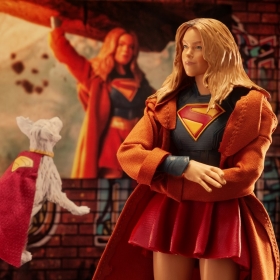
15.07.2026 • S.P.A.C.E POSTCARD COLLECTION JULY 2026
"Yeah, Bud, that's me!"
Kara proudly shows off our July postcard to her loyal companion, Krypto. She posed for Bill, who captured this heroic shot for us. The image features the McFarlane Toys Supergirl action figure based on the recent movie – specifically, Milly Alcock's portrayal of the heroine. A huge thank you for this wonderful postcard motif!
As always, you can snag a free copy of this awesome postcard, as we're including it in every package we ship out this month. Just browse through our shop – you'll find this figure and other cool »Supergirl« figures in stock. And for more epic toy photos, be sure to check out @toyphotoguy!
Kara proudly shows off our July postcard to her loyal companion, Krypto. She posed for Bill, who captured this heroic shot for us. The image features the McFarlane Toys Supergirl action figure based on the recent movie – specifically, Milly Alcock's portrayal of the heroine. A huge thank you for this wonderful postcard motif!
As always, you can snag a free copy of this awesome postcard, as we're including it in every package we ship out this month. Just browse through our shop – you'll find this figure and other cool »Supergirl« figures in stock. And for more epic toy photos, be sure to check out @toyphotoguy!

14.07.2026 • 40 YEARS OF ALIENS
Exactly 40 years ago today, James Cameron's »Aliens« premiered in Westwood, California. The sequel to Ridley Scott's 1979 film »Alien« took a path entirely its own. While the latter followed the pattern of a classic horror movie and functioned like a slasher – with the spaceship Nostromo serving as an inescapable setting, much like a haunted house – the series' second part pivots to the action genre instead.
The story takes place 57 years after Ripley's first encounter with the alien. She has been drifting aimlessly through space in cryosleep aboard her escape pod. She is eventually discovered by chance and brought to a space station, where initially, little credence is given to her accounts of the encounter with the creature. However, when contact is lost with the now-colonized exomoon LV-426, Ripley is asked to join a squad of Space Marines to investigate what happened there. They arrive too late – the entire colony has been overrun by aliens, and the team must fight for survival.
The film delivers plenty of suspense and spectacular battle scenes. Ripley's character gains depth and undergoes significant development; she becomes a maternal protector to a young girl named Newt. Furthermore, the Alien-lore is expanded: building upon the cycle established in the first film – egg, facehugger, chestburster, and xenomorph – we learn the origin of the eggs and are introduced to the Alien Queen. She, too, is driven by the instinct to protect her brood. Consequently, the film culminates in a final showdown between the two mothers.
»Aliens« won two Academy Awards: Best Sound Editing and Best Visual Effects. In total, the film received nominations in seven categories, including a nod for Sigourney Weaver as Best Actress in a Leading Role. It also received nominations for Best Film Editing, Best Art Direction, Best Original Score, and Best Sound.
The »Alien« franchise has long been a major player in the world of collectibles, too. To mark the 40th anniversary of »Aliens«, James Cameron's classic is once again seeing a surge of new collectibles – much to the delight of fans. The range extends from affordable NECA action figures (featuring Xenomorphs, the Alien Queen, the Power Loader, and accessory sets) and premium 1:6 scale Movie Masterpiece figures from Hot Toys (Ellen Ripley and a Warrior Alien) to breathtaking dioramas from Prime 1 Studio, such as the Queen Alien Ultimate Diorama Masterline Statue, a colossal collectible that instantly leaves us breathless and drooling.
We hope you enjoy browsing our Alien category:
https://www.space-figuren.de/Movies/Alien:::4681_4712.html
The story takes place 57 years after Ripley's first encounter with the alien. She has been drifting aimlessly through space in cryosleep aboard her escape pod. She is eventually discovered by chance and brought to a space station, where initially, little credence is given to her accounts of the encounter with the creature. However, when contact is lost with the now-colonized exomoon LV-426, Ripley is asked to join a squad of Space Marines to investigate what happened there. They arrive too late – the entire colony has been overrun by aliens, and the team must fight for survival.
The film delivers plenty of suspense and spectacular battle scenes. Ripley's character gains depth and undergoes significant development; she becomes a maternal protector to a young girl named Newt. Furthermore, the Alien-lore is expanded: building upon the cycle established in the first film – egg, facehugger, chestburster, and xenomorph – we learn the origin of the eggs and are introduced to the Alien Queen. She, too, is driven by the instinct to protect her brood. Consequently, the film culminates in a final showdown between the two mothers.
»Aliens« won two Academy Awards: Best Sound Editing and Best Visual Effects. In total, the film received nominations in seven categories, including a nod for Sigourney Weaver as Best Actress in a Leading Role. It also received nominations for Best Film Editing, Best Art Direction, Best Original Score, and Best Sound.
The »Alien« franchise has long been a major player in the world of collectibles, too. To mark the 40th anniversary of »Aliens«, James Cameron's classic is once again seeing a surge of new collectibles – much to the delight of fans. The range extends from affordable NECA action figures (featuring Xenomorphs, the Alien Queen, the Power Loader, and accessory sets) and premium 1:6 scale Movie Masterpiece figures from Hot Toys (Ellen Ripley and a Warrior Alien) to breathtaking dioramas from Prime 1 Studio, such as the Queen Alien Ultimate Diorama Masterline Statue, a colossal collectible that instantly leaves us breathless and drooling.
We hope you enjoy browsing our Alien category:
https://www.space-figuren.de/Movies/Alien:::4681_4712.html
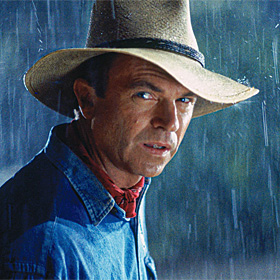
13.07.2026 • REST IN PEACE, SAM NEILL!
This morning began with sad news: Sam Neill has died. The New Zealand actor passed away on Monday at the age of 78, surrounded by his family in Australia; his relatives announced the news on the actor's official Instagram account. His death was "sudden and unexpected." According to the statement from his relatives, he "passed with the dignity that has characterised his whole life." The family's statement further noted that the star had been "cancer free." The actor had publicly revealed his cancer diagnosis in 2023.
Born in Northern Ireland in 1947 to an English mother and a New Zealand father, Neill moved to Christchurch with his family in 1954. He first gained recognition for his performance in the film »Sleeping Dogs« (1977); leading roles followed in films such as »Possession« (1981), »Dead Calm« (1989), »The Hunt for Red October« (1990), »The Piano« (1993), »In the Mouth of Madness« (1994), and »Event Horizon« (1997).
He achieved particular fame for his role as paleontologist Dr. Alan Grant in »Jurassic Park« (1993); he reprised this role in »Jurassic Park III« (2001) and »Jurassic World Dominion« (2022).
In this likable New Zealander, we have lost a great actor who gave us many wonderful hours of entertainment in the cinema and on television. R.I.P., Sam Neill – we will miss you!
Born in Northern Ireland in 1947 to an English mother and a New Zealand father, Neill moved to Christchurch with his family in 1954. He first gained recognition for his performance in the film »Sleeping Dogs« (1977); leading roles followed in films such as »Possession« (1981), »Dead Calm« (1989), »The Hunt for Red October« (1990), »The Piano« (1993), »In the Mouth of Madness« (1994), and »Event Horizon« (1997).
He achieved particular fame for his role as paleontologist Dr. Alan Grant in »Jurassic Park« (1993); he reprised this role in »Jurassic Park III« (2001) and »Jurassic World Dominion« (2022).
In this likable New Zealander, we have lost a great actor who gave us many wonderful hours of entertainment in the cinema and on television. R.I.P., Sam Neill – we will miss you!

09.07.2026 • GROOVY!
A good 45 years ago, Sam Raimi launched one of the most popular and enduring horror franchises of all time with »The Evil Dead«. Ash Williams, the protagonist played by Bruce Campbell, has long since become a pop-culture icon. After »Evil Dead II« (1987) and »Army of Darkness« (1992), Campbell reprised the role of Ash for the three seasons of the TV series »Ash vs Evil Dead« (2015–2018). The franchise had already gained new momentum in 2013 with the »Evil Dead« reboot – produced by Raimi and Campbell, directed by Fede Álvarez, and featuring an entirely new cast. »Evil Dead Rise«, directed by Lee Cronin, followed in 2023. Today, »Evil Dead Burn« opens in German cinemas.
Long-running franchises often have occasional misfires – films we would rather forget. The »Evil Dead« franchise, however, is a notable exception; there isn't a single bad film in the series. The producers have shown a keen eye for talented young directors when making the new films – a tradition that now continues with Sébastien Vaniček. He had already made a name for himself with »Infested« (originally titled »Vermines«). The fact that »Evil Dead« has never been for the faint of heart is evidenced by the many years the films spent on the banned list. Now, the French director Vaniček spices up his film with a generous dose of "New French Extremity." If early reviews are to be believed, »Evil Dead Burn« is the most brutal and terrifying ride in the horror series to date, packed with bloodshed and demonic chaos. Reviews have been overwhelmingly positive so far; the only occasional criticism is that the film doesn't significantly evolve the franchise. Fans should still get their money's worth and have a blast with this family reunion from hell.
To whet your appetite, here is the full-length trailer once again:
https://youtu.be/nMzhf6qYJ4I
And if not only you but also your collection is thirsting for blood, we recommend taking a look at the Evil Dead collectibles in our shop:
https://www.space-figuren.de/Movies/The-Evil-Dead:::4681_5143.html?language=en
Long-running franchises often have occasional misfires – films we would rather forget. The »Evil Dead« franchise, however, is a notable exception; there isn't a single bad film in the series. The producers have shown a keen eye for talented young directors when making the new films – a tradition that now continues with Sébastien Vaniček. He had already made a name for himself with »Infested« (originally titled »Vermines«). The fact that »Evil Dead« has never been for the faint of heart is evidenced by the many years the films spent on the banned list. Now, the French director Vaniček spices up his film with a generous dose of "New French Extremity." If early reviews are to be believed, »Evil Dead Burn« is the most brutal and terrifying ride in the horror series to date, packed with bloodshed and demonic chaos. Reviews have been overwhelmingly positive so far; the only occasional criticism is that the film doesn't significantly evolve the franchise. Fans should still get their money's worth and have a blast with this family reunion from hell.
To whet your appetite, here is the full-length trailer once again:
https://youtu.be/nMzhf6qYJ4I
And if not only you but also your collection is thirsting for blood, we recommend taking a look at the Evil Dead collectibles in our shop:
https://www.space-figuren.de/Movies/The-Evil-Dead:::4681_5143.html?language=en

09.07.2026 • NEW TRAILERS
Today we've got news and new trailers for you from two of the biggest fantasy and sci-fi media franchises around right now, which couldn't be more different from one another: »Dune« and »Avatar: The Last Airbender«.
Let's start with the world of the benders of the four elements. The live-action series »Avatar: The Last Airbender« only just launched its second season on Netflix two weeks ago, and now Paramount+ is already handing us the first trailer and a moved-up release date – July 25th – for the new feature-length animated film »Avatar Aang: The Last Airbender«. There's been no small amount of drama surrounding this movie: when Paramount abruptly decided a few months back not to bring it to theaters as planned, but to release it exclusively on its own streaming service, the outrage was huge. Apparently so huge that the entire film leaked online in 4K. That put Paramount under pressure and likely led to the earlier release. Since then, the company seems to have course-corrected a little, having realized this really is a pop-culture phenomenon: the franchise is getting its own panel on the stage of the legendary Hall H at San Diego Comic-Con (SDCC). The trailer itself looks absolutely epic:
https://youtu.be/7b20GRFZBFE
The film is set ten years after the original series. Team Avatar is trying to preserve a fragile peace while Aang wrestles internally with the destruction of his culture, until a mysterious stranger is discovered who wants to help rebuild the Air Nomads. The decision to stick with classic hand-drawn animation instead of CG clearly pays off; it's by far the most beautiful entry in the series and a homage to the golden age of anime cinema. A movie screen would definitely have done this film justice!
When it comes to production design and the sheer necessity of an (IMAX) movie screen, the second film in today's news is of course right at the very front of the pack. Director Denis Villeneuve's Dune series raises the bar with every installment when it comes to visual power and the scale of its universe, and with »Dune: Part Three« the monumental trilogy now reaches its culminating end on December 18th – an impact on cinema history you can safely mention in the same breath as »Star Wars« or »Lord of the Rings«. The film adapts Frank Herbert's novel »Dune Messiah« and is set roughly 17 years after the events of »Part Two«: Paul Atreides (Timothée Chalamet) rules as Emperor over the entire universe, yet the religious fanaticism he unleashed among the Fremen takes on a momentum of its own that even he can no longer control. The brand-new, considerably longer trailer hints that Villeneuve may deviate from the book and, unlike in the source material, spare Chani (Zendaya) from dying in childbirth, instead potentially turning her into a figure who stands against an ever more powerful Paul:
https://youtu.be/NdvqHc56lE0
Newly on board: Robert Pattinson as antagonist Scytale, along with Anya Taylor-Joy as Paul's sister Alia. For the first time, the cinematographer is no longer Greig Fraser but Oscar winner Linus Sandgren (»La La Land«, »Wuthering Heights«), and the first small departures from the visual style of the previous two films are already visible in the trailer; it seems to be warmer, more saturated. Reportedly, most of this installment was shot directly onto celluloid, rather than Frasers digital-to-film-back-to-digital workflow, for the first time in the trilogy.
Let's start with the world of the benders of the four elements. The live-action series »Avatar: The Last Airbender« only just launched its second season on Netflix two weeks ago, and now Paramount+ is already handing us the first trailer and a moved-up release date – July 25th – for the new feature-length animated film »Avatar Aang: The Last Airbender«. There's been no small amount of drama surrounding this movie: when Paramount abruptly decided a few months back not to bring it to theaters as planned, but to release it exclusively on its own streaming service, the outrage was huge. Apparently so huge that the entire film leaked online in 4K. That put Paramount under pressure and likely led to the earlier release. Since then, the company seems to have course-corrected a little, having realized this really is a pop-culture phenomenon: the franchise is getting its own panel on the stage of the legendary Hall H at San Diego Comic-Con (SDCC). The trailer itself looks absolutely epic:
https://youtu.be/7b20GRFZBFE
The film is set ten years after the original series. Team Avatar is trying to preserve a fragile peace while Aang wrestles internally with the destruction of his culture, until a mysterious stranger is discovered who wants to help rebuild the Air Nomads. The decision to stick with classic hand-drawn animation instead of CG clearly pays off; it's by far the most beautiful entry in the series and a homage to the golden age of anime cinema. A movie screen would definitely have done this film justice!
When it comes to production design and the sheer necessity of an (IMAX) movie screen, the second film in today's news is of course right at the very front of the pack. Director Denis Villeneuve's Dune series raises the bar with every installment when it comes to visual power and the scale of its universe, and with »Dune: Part Three« the monumental trilogy now reaches its culminating end on December 18th – an impact on cinema history you can safely mention in the same breath as »Star Wars« or »Lord of the Rings«. The film adapts Frank Herbert's novel »Dune Messiah« and is set roughly 17 years after the events of »Part Two«: Paul Atreides (Timothée Chalamet) rules as Emperor over the entire universe, yet the religious fanaticism he unleashed among the Fremen takes on a momentum of its own that even he can no longer control. The brand-new, considerably longer trailer hints that Villeneuve may deviate from the book and, unlike in the source material, spare Chani (Zendaya) from dying in childbirth, instead potentially turning her into a figure who stands against an ever more powerful Paul:
https://youtu.be/NdvqHc56lE0
Newly on board: Robert Pattinson as antagonist Scytale, along with Anya Taylor-Joy as Paul's sister Alia. For the first time, the cinematographer is no longer Greig Fraser but Oscar winner Linus Sandgren (»La La Land«, »Wuthering Heights«), and the first small departures from the visual style of the previous two films are already visible in the trailer; it seems to be warmer, more saturated. Reportedly, most of this installment was shot directly onto celluloid, rather than Frasers digital-to-film-back-to-digital workflow, for the first time in the trilogy.
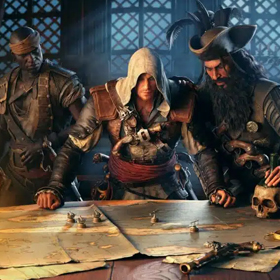
09.07.2026 • OUR BLACK FLAG IS HOISTED ONCE AGAIN!
Arrrrr Mateys! The Jackdaw sets sail once more! Starting today, all up-and-coming assassins embark again on a grand plundering voyage through the early-18th-century Caribbean in »Assassin's Creed Black Flag Resynced«. Once more we take to the seas as Welsh rogue captain Edward Kenway with the loyal quartermaster Adéwalé, crossing paths with the famous figures of the Golden Age of Piracy such as Anne Bonny, Mary Read, Blackbeard, Benjamin Hornigold, Charles Vane, Stede Bonnet and Calico Jack.
The 13-year-old game has been thoroughly overhauled, with the graphics and movement animations in particular substantially modernized. It looks truly gorgeous, the Caribbean is wonderfully colorful, and it is and remains a deeply immersive world – thanks in no small part to those brief, delightful voyages set to sea shanties and the marine fauna that have been kept in the game, still unmatched anywhere else in gaming.
The original cast returned as well, recording around six hours of brand-new gameplay and story material. The underwater world has been noticeably expanded: rather than only during dedicated diving missions as before, Edward can now dive anywhere, explore reefs and recover treasure. Loading screens between cannon fire and cutlass combat are gone, and the environments have been enriched with fresh parkour routes and countless new secrets to discover. So this isn't a mere one-to-one copy, but an apparently all-around successful attempt to blend a modern AAA game with the nostalgia of what is arguably the second-best AC. At any rate, the first three hours felt like a homecoming – into a familiar world that now shines with new splendor and all but calls out to you to finally set sail again.
To immerse completely into the game, you can decorate your room with the pirate-bootylicious collectibles for »AC Black Flag Resynced« by PureArts.
The 13-year-old game has been thoroughly overhauled, with the graphics and movement animations in particular substantially modernized. It looks truly gorgeous, the Caribbean is wonderfully colorful, and it is and remains a deeply immersive world – thanks in no small part to those brief, delightful voyages set to sea shanties and the marine fauna that have been kept in the game, still unmatched anywhere else in gaming.
The original cast returned as well, recording around six hours of brand-new gameplay and story material. The underwater world has been noticeably expanded: rather than only during dedicated diving missions as before, Edward can now dive anywhere, explore reefs and recover treasure. Loading screens between cannon fire and cutlass combat are gone, and the environments have been enriched with fresh parkour routes and countless new secrets to discover. So this isn't a mere one-to-one copy, but an apparently all-around successful attempt to blend a modern AAA game with the nostalgia of what is arguably the second-best AC. At any rate, the first three hours felt like a homecoming – into a familiar world that now shines with new splendor and all but calls out to you to finally set sail again.
To immerse completely into the game, you can decorate your room with the pirate-bootylicious collectibles for »AC Black Flag Resynced« by PureArts.
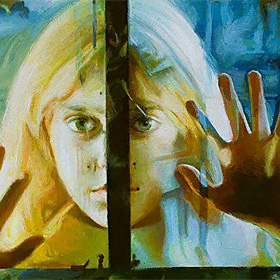
08.07.2026 • A FILM ANNIVERSARY – OR 60 YEARS OF FEAR
Don't be fooled by the English title – »Kill, Baby… Kill!« wasn't exactly inspired, which is why the original Italian title, »Operazione paura« (translating to "Operation Fear"), remains the best one in our eyes. But don't let the silly title put you off; this is one of the finest ghost stories ever made. It premiered in Turin exactly 60 years ago today. That is something worth celebrating!
Doctor Paul Eswai arrives in a small village to perform an autopsy on a young woman who died under mysterious circumstances. Eswai concludes that she committed suicide. However, the superstitious villagers claim that the ghost of a dead child is responsible for all the misfortune and that anyone who sees the child is doomed to die...
Mario Bava is a master of atmosphere. He effortlessly creates a seamless transition between reality and nightmare. Much of what is considered a staple of the horror genre today traces back to Bava, who was not only the master of Italian Gothic but is also regarded as the godfather of giallo. For instance, whenever you see a ball suddenly bounce across the frame in a horror movie – Mario was the one who pioneered that technique.
A few more side notes: The film almost fell apart over the casting of the ghostly girl. Bava auditioned hundreds of young girls for the role of Melissa Graps but couldn't find a suitable actress. Eventually, he cast Valerio Valeri, his caretaker's son, in the part. The boy, however, was reportedly anything but happy about having to wear a dress.
Although Bava was known for managing budgets exceptionally well, the production ran out of money during filming. Nevertheless, he managed to motivate the cast and crew to keep working without pay for the time being. There was no money left for the score either, so the director assembled the soundtrack largely from pieces used in other productions.
Here's the preview to whet your appetite:
https://youtu.be/Uy2WfCtVD70
Doctor Paul Eswai arrives in a small village to perform an autopsy on a young woman who died under mysterious circumstances. Eswai concludes that she committed suicide. However, the superstitious villagers claim that the ghost of a dead child is responsible for all the misfortune and that anyone who sees the child is doomed to die...
Mario Bava is a master of atmosphere. He effortlessly creates a seamless transition between reality and nightmare. Much of what is considered a staple of the horror genre today traces back to Bava, who was not only the master of Italian Gothic but is also regarded as the godfather of giallo. For instance, whenever you see a ball suddenly bounce across the frame in a horror movie – Mario was the one who pioneered that technique.
A few more side notes: The film almost fell apart over the casting of the ghostly girl. Bava auditioned hundreds of young girls for the role of Melissa Graps but couldn't find a suitable actress. Eventually, he cast Valerio Valeri, his caretaker's son, in the part. The boy, however, was reportedly anything but happy about having to wear a dress.
Although Bava was known for managing budgets exceptionally well, the production ran out of money during filming. Nevertheless, he managed to motivate the cast and crew to keep working without pay for the time being. There was no money left for the score either, so the director assembled the soundtrack largely from pieces used in other productions.
Here's the preview to whet your appetite:
https://youtu.be/Uy2WfCtVD70

06.07.2026 • PAN'S LABYRINTH
Once every 10, 20 years a film makes its way into theaters that turns pretty much everything you thought you knew about modern cinema on its head, and that grabs you so personally you'd love to show it to every single person you meet. For our Tim, that film is »Pan's Labyrinth«. The work by cult director Guillermo del Toro celebrates its 20th anniversary this year, and following the announcement, complete with a trailer and exclusive poster, that the film is returning to theaters in October – planned here by Studiocanal, in the US by Cineverse and Fathom Entertainment –, Tim recalls:
I was 17 when »Pan's Labyrinth«, or »El laberinto del fauno« as it's called in the Spanish original, finally made it into German cinemas in February 2007, about half a year after its international theatrical release. The film had already picked up plenty of glowing reviews in the metal and gothic magazines I read as a teenager, and had just scooped up three golden boys at the Oscars a few days before I went to see it with three classmates at our village cinema. We were right in the middle of the fantasy boom kicked off by »The Lord of the Rings«, »Harry Potter«, and »Pirates of the Caribbean«, and I'd already caught a whiff of del Toro with »Hellboy« and »Blade II«. The Spanish Civil War fascinated me endlessly too ... and yet nothing had prepared me for what an experience this film would be. Beautiful and devastating and utterly disturbing all at once – the four of us were never quite the same afterward. For weeks, we'd greet each other in the school hallways by stumbling around with our hands stretched out in front of us, Pale Man style.
The way del Toro weaves historical, brutal reality together with the fairy-tale imagery of a twisted fantasy world is nothing short of genius, and it's a blueprint for some of his later masterpieces like »The Shape of Water« or »Pinocchio«.
At its core, the film tells a fairly simple story: Spain, 1944, shortly after the civil war. Young Ofelia (Ivana Baquero) moves with her pregnant mother (Ariadna Gil) to live with her stepfather, the sadistic Francoist Captain Vidal (Sergi López), who's busy hunting down the last remaining resistance fighters in the mountains. In a crumbling labyrinth, Ofelia meets an ancient Faun (Doug Jones) who tells her she's the lost princess of an underground kingdom — and sets her three tasks to complete. What follows is anything but escapism: the fairy-tale world is every bit as cruel as the real one, and fans still argue to this day over whether the ending brings redemption or tragedy.
I actually only learned while writing this piece that »Pan's Labyrinth« was originally meant to be the second part of a planned trilogy that del Toro started with »The Devil's Backbone« (2001) — another beautiful ghost story set in Civil War–era Spain. A third film never came to be – a fate that, sadly, also befell del Toro's Hellboy series.
The exclusive, stunning anniversary poster comes from the outstanding American artist James Jean, personally commissioned by del Toro. Twenty years ago, Jean was already designing covers for the DC/Vertigo series »Fables« – fairy-tale motifs have run through his entire career. Personally, the artwork reminds me a lot of the enchanted imagery of Dutch artist Anton Pieck. Definitely go take a look and judge for yourselves. My wall will probably be sporting it soon, should I manage to get my hands on a copy.
Speaking of decorating: all fans should take a look at the figures from the "Guillermo del Toro Signature Collection" by NECA, including the Faun, Ofelia, the Pale Man, and even ghost-master del Toro himself. Unfortunately the pieces are currently completely sold out, but it's worth keeping an eye out. Maybe the toad or the fairies will show up in time for the re-release.
Here's the official trailer for the 20th anniversary:
https://youtu.be/TaFZoqWoOj0
The melody of Ofelia's lullaby still sends shivers down our spines!
»Pan's Labyrinth« will be released in some cinemas as a meticulous 4K restoration (the version that was shown at Cannes Film Festival this year) or in generative 3D. Both versions were overseen by del Toro himself.
I was 17 when »Pan's Labyrinth«, or »El laberinto del fauno« as it's called in the Spanish original, finally made it into German cinemas in February 2007, about half a year after its international theatrical release. The film had already picked up plenty of glowing reviews in the metal and gothic magazines I read as a teenager, and had just scooped up three golden boys at the Oscars a few days before I went to see it with three classmates at our village cinema. We were right in the middle of the fantasy boom kicked off by »The Lord of the Rings«, »Harry Potter«, and »Pirates of the Caribbean«, and I'd already caught a whiff of del Toro with »Hellboy« and »Blade II«. The Spanish Civil War fascinated me endlessly too ... and yet nothing had prepared me for what an experience this film would be. Beautiful and devastating and utterly disturbing all at once – the four of us were never quite the same afterward. For weeks, we'd greet each other in the school hallways by stumbling around with our hands stretched out in front of us, Pale Man style.
The way del Toro weaves historical, brutal reality together with the fairy-tale imagery of a twisted fantasy world is nothing short of genius, and it's a blueprint for some of his later masterpieces like »The Shape of Water« or »Pinocchio«.
At its core, the film tells a fairly simple story: Spain, 1944, shortly after the civil war. Young Ofelia (Ivana Baquero) moves with her pregnant mother (Ariadna Gil) to live with her stepfather, the sadistic Francoist Captain Vidal (Sergi López), who's busy hunting down the last remaining resistance fighters in the mountains. In a crumbling labyrinth, Ofelia meets an ancient Faun (Doug Jones) who tells her she's the lost princess of an underground kingdom — and sets her three tasks to complete. What follows is anything but escapism: the fairy-tale world is every bit as cruel as the real one, and fans still argue to this day over whether the ending brings redemption or tragedy.
I actually only learned while writing this piece that »Pan's Labyrinth« was originally meant to be the second part of a planned trilogy that del Toro started with »The Devil's Backbone« (2001) — another beautiful ghost story set in Civil War–era Spain. A third film never came to be – a fate that, sadly, also befell del Toro's Hellboy series.
The exclusive, stunning anniversary poster comes from the outstanding American artist James Jean, personally commissioned by del Toro. Twenty years ago, Jean was already designing covers for the DC/Vertigo series »Fables« – fairy-tale motifs have run through his entire career. Personally, the artwork reminds me a lot of the enchanted imagery of Dutch artist Anton Pieck. Definitely go take a look and judge for yourselves. My wall will probably be sporting it soon, should I manage to get my hands on a copy.
Speaking of decorating: all fans should take a look at the figures from the "Guillermo del Toro Signature Collection" by NECA, including the Faun, Ofelia, the Pale Man, and even ghost-master del Toro himself. Unfortunately the pieces are currently completely sold out, but it's worth keeping an eye out. Maybe the toad or the fairies will show up in time for the re-release.
Here's the official trailer for the 20th anniversary:
https://youtu.be/TaFZoqWoOj0
The melody of Ofelia's lullaby still sends shivers down our spines!
»Pan's Labyrinth« will be released in some cinemas as a meticulous 4K restoration (the version that was shown at Cannes Film Festival this year) or in generative 3D. Both versions were overseen by del Toro himself.

03.07.2026 • SILO – SEASON 3
Today marks the premiere of Season 3 of »Silo« on Apple TV – one of today's best dystopian sci-fi series.
As a quick recap: Season 2 ended on a dramatic cliffhanger featuring a fiery decontamination event in the airlock involving Juliette (Rebecca Ferguson) and Bernard (Tim Robbins). An epilogue then flashed back 350 years, to the pre-apocalyptic era, showing journalist Helen Drew (Jessica Henwick) in conversation with Congressman Daniel Keene (Ashley Zukerman).
The stage was thus set: Season 3 unfolds across two timelines. We learn more about past events and the origins of many of the Silo's secrets. In Silo 18, three months have passed since the end of Season 2. Juliette survived the fire and was elected the new mayor, but she has lost her memory and cannot recall anything or anyone; she no longer knows how to distinguish friend from foe. Only occasional, fleeting fragments of memory surface – though initially, she cannot make sense of them. Once again, she finds herself caught between conspiracy and rebellion...
The new season consists of ten episodes, released weekly. A final fourth season has already been commissioned. To whet your appetite, here is the trailer for this suspense-filled mystery:
https://youtu.be/BLBvbMtjyAQ
As a quick recap: Season 2 ended on a dramatic cliffhanger featuring a fiery decontamination event in the airlock involving Juliette (Rebecca Ferguson) and Bernard (Tim Robbins). An epilogue then flashed back 350 years, to the pre-apocalyptic era, showing journalist Helen Drew (Jessica Henwick) in conversation with Congressman Daniel Keene (Ashley Zukerman).
The stage was thus set: Season 3 unfolds across two timelines. We learn more about past events and the origins of many of the Silo's secrets. In Silo 18, three months have passed since the end of Season 2. Juliette survived the fire and was elected the new mayor, but she has lost her memory and cannot recall anything or anyone; she no longer knows how to distinguish friend from foe. Only occasional, fleeting fragments of memory surface – though initially, she cannot make sense of them. Once again, she finds herself caught between conspiracy and rebellion...
The new season consists of ten episodes, released weekly. A final fourth season has already been commissioned. To whet your appetite, here is the trailer for this suspense-filled mystery:
https://youtu.be/BLBvbMtjyAQ
01.07.2026 • MINIONS & MONSTERS
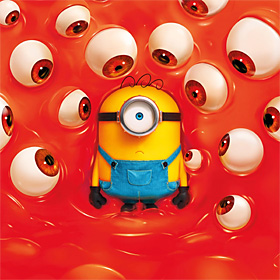
»Minions & Monsters« is hitting theaters today. Our Mick put the film to the test last weekend:
I find the Minions quite cute, but I always felt they were aimed at a much younger audience. So, I really had no reason to see the new movie in the cinema, were it not for that sweltering heat making my apartment almost uninhabitable. An air-conditioned theater offered a temptation I couldn't resist. That's how I ended up watching »Minions & Monsters« last weekend, and I was pleasantly surprised.
The Film is a grand love letter to cinema, packed with film references – ranging from the works of the Lumière brothers to Damien Chazelle's »Babylon«. Countless scenes recreate film history, albeit strictly "minionized" and executed with immense affection and attention to detail. While the children in the audience were thoroughly amused by all the wacky slapstick, their adult companions could spot numerous allusions to film classics and cameos by stars like Charlie Chaplin and Buster Keaton.
The story centers on two Minions, James and Henry. James loves telling stories and drawing; in Henry, he finds a listener and a friend who truly appreciates it. Along the way, we learn that the Minions have been on Earth for ages, always searching for a Big Boss to serve. Over the centuries, their journey takes them to Hollywood, where they become major movie stars. However, their careers come to an abrupt end with the advent of talking pictures; their gibberish simply doesn't resonate with audiences. So, they move on in search of the next Big Boss. Only James, the storyteller, has found his true calling: he wants to make a monster movie...
»Minions & Monsters« loses a bit of momentum in the second half, relying almost exclusively on a string of slapstick gags. Still, the kids in the row behind me were having the time of their lives. I had actually just wanted to enjoy the air conditioning, but the Hollywood homage treated me to an entertaining 90 minutes. Afterwards, I watched »Supergirl«, but that's a whole other story.
I find the Minions quite cute, but I always felt they were aimed at a much younger audience. So, I really had no reason to see the new movie in the cinema, were it not for that sweltering heat making my apartment almost uninhabitable. An air-conditioned theater offered a temptation I couldn't resist. That's how I ended up watching »Minions & Monsters« last weekend, and I was pleasantly surprised.
The Film is a grand love letter to cinema, packed with film references – ranging from the works of the Lumière brothers to Damien Chazelle's »Babylon«. Countless scenes recreate film history, albeit strictly "minionized" and executed with immense affection and attention to detail. While the children in the audience were thoroughly amused by all the wacky slapstick, their adult companions could spot numerous allusions to film classics and cameos by stars like Charlie Chaplin and Buster Keaton.
The story centers on two Minions, James and Henry. James loves telling stories and drawing; in Henry, he finds a listener and a friend who truly appreciates it. Along the way, we learn that the Minions have been on Earth for ages, always searching for a Big Boss to serve. Over the centuries, their journey takes them to Hollywood, where they become major movie stars. However, their careers come to an abrupt end with the advent of talking pictures; their gibberish simply doesn't resonate with audiences. So, they move on in search of the next Big Boss. Only James, the storyteller, has found his true calling: he wants to make a monster movie...
»Minions & Monsters« loses a bit of momentum in the second half, relying almost exclusively on a string of slapstick gags. Still, the kids in the row behind me were having the time of their lives. I had actually just wanted to enjoy the air conditioning, but the Hollywood homage treated me to an entertaining 90 minutes. Afterwards, I watched »Supergirl«, but that's a whole other story.
01.07.2026 • PRODUCT OF THE MONTH JULY 2026
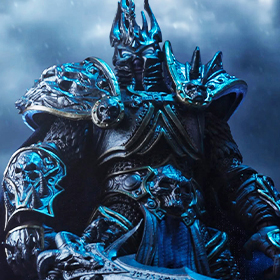
The Lich King was not always the ultimate antagonist in the »World of Warcraft« universe. After all, Arthas Menethil was once the Crown Prince of Lordaeron and a Paladin of the Light. His life was nothing short of glorious until the plague befell his people, causing the victims to rise as part of the army of the undead that became known as the Scourge. To put an end to it, Arthas slaughtered his own subjects before they could turn. Dreadlord Mal'Ganis was responsible for that plague, and the prince soon hunted him down. Before his revenge could slip away, he claimed the cursed runeblade, Frostmourne. Whoever wielded it would gain infinite power but lose their soul. Arthas cared nothing for the consequences and used it to defeat Mal'Ganis. When his people welcomed him back to Lordaeron as a hero, he marched into the throne room and impaled his father with the sword. Shortly after, he plunged his homeland into ruin. Years later, the Lich King called him to his side to merge with him through the Helm of Domination, so that the Lich King would be reborn and seize control of the Scourge.
McFarlane Toys has immortalized this very dark presence in the Lich King Elite Edition. This is the 9th Elite Edition and also the manufacturer's first-ever »World of Warcraft« figure. With up to 22 points of articulation, you can pose the Lich King both with and without the Helm of Domination. The exceptional attention to detail in the Elite Editions is showcased here primarily in the runeblade Frostmourne and the game-accurate armor. The tattered cape is wire-reinforced, allowing for dynamic posing.
The Lich King Elite Edition has everything we could wish for in a Product of the Month: a tragically epic backstory, countless details that will make the heart of any »WoW« fan beat faster, and a price tag that truly stands out. On top of that, the figure comes with a redemption card that allows you to unlock four exclusive in-game transmogrifications. Who could say no to that?
We certainly can't! That is why we have named McFarlane's Lich King our 💥 Product of the Month 💥 July 2026. However, we cannot guarantee whether this action figure will actually allow you to command the Scourge. 😄
McFarlane Toys has immortalized this very dark presence in the Lich King Elite Edition. This is the 9th Elite Edition and also the manufacturer's first-ever »World of Warcraft« figure. With up to 22 points of articulation, you can pose the Lich King both with and without the Helm of Domination. The exceptional attention to detail in the Elite Editions is showcased here primarily in the runeblade Frostmourne and the game-accurate armor. The tattered cape is wire-reinforced, allowing for dynamic posing.
The Lich King Elite Edition has everything we could wish for in a Product of the Month: a tragically epic backstory, countless details that will make the heart of any »WoW« fan beat faster, and a price tag that truly stands out. On top of that, the figure comes with a redemption card that allows you to unlock four exclusive in-game transmogrifications. Who could say no to that?
We certainly can't! That is why we have named McFarlane's Lich King our 💥 Product of the Month 💥 July 2026. However, we cannot guarantee whether this action figure will actually allow you to command the Scourge. 😄

30.06.2026 • NEW TRAILERS
The first half of 2026 has come and gone, and as film fans, we have little to complain about. While there were a few blockbusters that fell merely into the "okay" category, there were also exciting smaller flicks like »Backrooms« and »Obsession«, whose young directors shook up the cinematic landscape and reflected the audience's craving for good, original stories. And in »The Furious«, we got the martial arts work we had long been waiting for. But let's take a look towards the future, at some new trailers for films that still await us in the coming months!
»Coyote vs. ACME« hits theaters this August – a film no one expected to see anymore, given that Warner Bros. had planned to shelve it and write it off for tax purposes. But Looney Tunes fans fought for the movie, and Ketchup Entertainment made Warner Bros. an offer they couldn't refuse.
After ACME products let him down once too often during his relentless pursuit of the Road Runner, Wile E. Coyote decides to hire lawyer Kevin Avery (Will Forte) to sue the corporation. The company is represented by Kevin's former boss, the shrewd attorney Buddy Crane (John Cena). Here is the trailer for this live-action/animation crossover:
https://youtu.be/H-43VeYGiPM
»Hope«, the new film from Na Hong-jin (»The Wailing« ), opens here on October 8.
In the remote South Korean village of Hope Harbor, Police Chief Bum-seok and Officer Sung-ae are called in to investigate incidents involving a mysterious creature wreaking havoc in the community. But appearances can be deceiving, and perceptions can be misleading...
It looks like exciting sci-fi monster action. The trailer itself is refreshingly understated. That's all we need to know – we're on board!
https://youtu.be/Vt7860xZFXk
We last saw Jenna Ortega as the moody, grumpy Wednesday Addams. In Taika Waititi's new film, an adaptation of Kazuo Ishiguro's novel »Klara and the Sun«, she plays the exact opposite. Klara is an "Artificial Friend" who wants nothing more than to find the perfect home – and discovers a kindred spirit in Josie.
The enchanting Jenna Ortega, Taika Waititi's knack for wit and timing, and the heartwarming source material by Nobel Prize-winning author Kazuo Ishiguro – we're sold.
https://youtu.be/wixzainceAE
The film opens in October.
Last but not least, the first trailer for »Werwulf«, Robert Eggers' new film, was released yesterday. What an atmosphere! We were captivated from the very first second. But see for yourselves:
https://youtu.be/cmjpadVj-Vk
»Werwulf« tells a harrowing story of devotion, damnation, and the devil within. The film opens in the US at Christmas. However, just as with »Nosferatu«, we have to wait until the new year; »Werwulf« will kick off our 2027 cinema year in early January. We expect nothing less than a masterpiece!
»Coyote vs. ACME« hits theaters this August – a film no one expected to see anymore, given that Warner Bros. had planned to shelve it and write it off for tax purposes. But Looney Tunes fans fought for the movie, and Ketchup Entertainment made Warner Bros. an offer they couldn't refuse.
After ACME products let him down once too often during his relentless pursuit of the Road Runner, Wile E. Coyote decides to hire lawyer Kevin Avery (Will Forte) to sue the corporation. The company is represented by Kevin's former boss, the shrewd attorney Buddy Crane (John Cena). Here is the trailer for this live-action/animation crossover:
https://youtu.be/H-43VeYGiPM
»Hope«, the new film from Na Hong-jin (»The Wailing« ), opens here on October 8.
In the remote South Korean village of Hope Harbor, Police Chief Bum-seok and Officer Sung-ae are called in to investigate incidents involving a mysterious creature wreaking havoc in the community. But appearances can be deceiving, and perceptions can be misleading...
It looks like exciting sci-fi monster action. The trailer itself is refreshingly understated. That's all we need to know – we're on board!
https://youtu.be/Vt7860xZFXk
We last saw Jenna Ortega as the moody, grumpy Wednesday Addams. In Taika Waititi's new film, an adaptation of Kazuo Ishiguro's novel »Klara and the Sun«, she plays the exact opposite. Klara is an "Artificial Friend" who wants nothing more than to find the perfect home – and discovers a kindred spirit in Josie.
The enchanting Jenna Ortega, Taika Waititi's knack for wit and timing, and the heartwarming source material by Nobel Prize-winning author Kazuo Ishiguro – we're sold.
https://youtu.be/wixzainceAE
The film opens in October.
Last but not least, the first trailer for »Werwulf«, Robert Eggers' new film, was released yesterday. What an atmosphere! We were captivated from the very first second. But see for yourselves:
https://youtu.be/cmjpadVj-Vk
»Werwulf« tells a harrowing story of devotion, damnation, and the devil within. The film opens in the US at Christmas. However, just as with »Nosferatu«, we have to wait until the new year; »Werwulf« will kick off our 2027 cinema year in early January. We expect nothing less than a masterpiece!
Payment methods


Shipping partner


Shipping country

© 2026 S.P.A.C.E - space-figuren.de • Alle Rechte vorbehalten • Umsetzung & Programmierung: Rehm Webdesign
modified eCommerce Shopsoftware © 2009-2026
modified eCommerce Shopsoftware © 2009-2026